
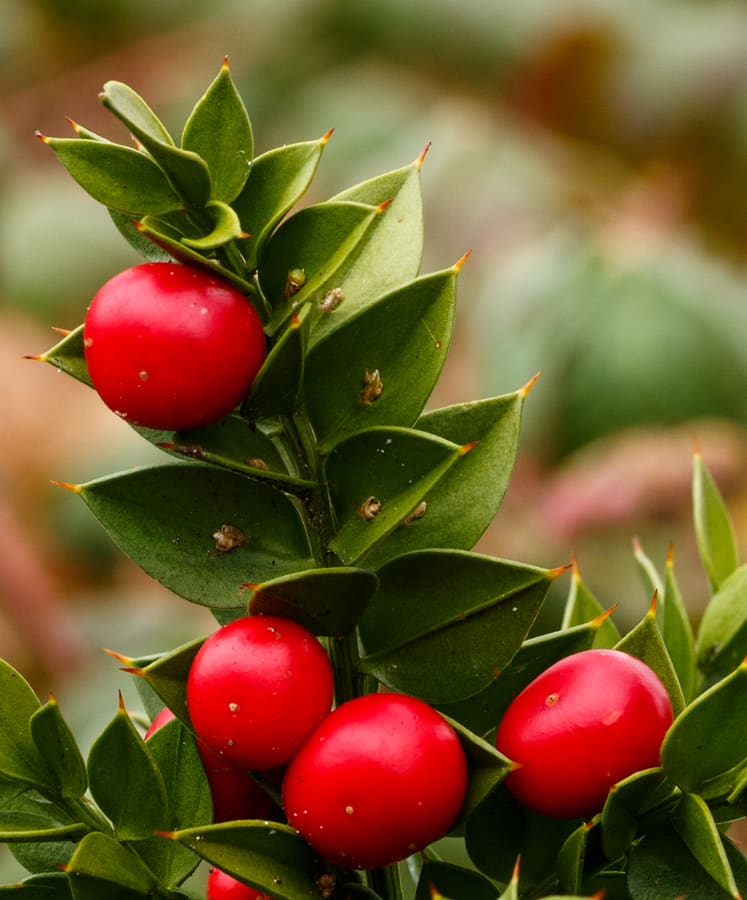
Butcher's Broom (ruscus aculeatus)
Photo: Dominicus Johannes Bergsma · CC BY-SA 4.0
- Circulatory
- 1 condition
- Licensed photo
Overview
Butcher’s broom is a bushy, evergreen perennial that can reach about 3 ft (1 m) in height. It has stiff, leaf-like branches ending in a sharp spine, with small greenish-white flowers and shiny red berries in autumn. Traditionally noted for its tonic effect on the vascular system, butcher’s broom helps prevent blood clots and supports the tone of arteries and veins. It is often recommended for varicose veins, hemorrhoids, phlebitis, and bruises.
Traditional uses & properties
Vascular Tonic: Strengthens blood vessels, helps reduce swelling, and supports healthy circulation. Vasoconstrictive & Anti-inflammatory: Saponin glycosides (like ruscogenin) cause veins to contract and may alleviate edema, varicose veins, and hemorrhoids.
Traditional preparations
Traditional texts describe the preparations below, and where those texts give specific amounts, the amounts are quoted here as part of that record. This is a record of historical practice, not a dosage recommendation - the figures are what the sources say, not what HerbMate tells you to take. Amounts, potency, and safe use vary enormously by preparation, plant part, and person.
Make a decoction and drink 2-4 ounces up to 3 times daily.
Safety & precautions
High Blood Pressure: Avoid using butcher’s broom if you have hypertension. General Safety: No other cautions are stated; however, consult a qualified practitioner when dealing with circulation issues.
Drug & food interactions
Interaction data is not available for this herb - talk to a pharmacist before combining it with any medication. A blank entry here means we have not documented interactions, not that none exist.
Habitat
This plant grows wild across much of Europe, western Asia, and North Africa, typically in woodland and undisturbed ground. Butcher’s broom is protected in some regions. In cultivation, it is harvested in the fall when the berries appear.
Traditionally used for
Each condition shows its first 2 remedies free. Premium opens the full remedy list for every condition - or come back for the free Condition of the Day.
Frequently asked questions
What is Butcher's Broom (ruscus aculeatus) traditionally used for?
Traditional sources describe Butcher's Broom (ruscus aculeatus) as follows: Vascular Tonic: Strengthens blood vessels, helps reduce swelling, and supports healthy circulation. Vasoconstrictive & Anti-inflammatory: Saponin glycosides (like ruscogenin) cause veins to contract and may alleviate edema, varicose veins, and hemorrhoids.
How is Butcher's Broom (ruscus aculeatus) prepared?
Traditional texts describe the preparations below, and where those texts give specific amounts, the amounts are quoted here as part of that record. This is a record of historical practice, not a dosage recommendation - the figures are what the sources say, not what HerbMate tells you to take. Amounts, potency, and safe use vary enormously by preparation, plant part, and person. Varicose Veins: Make a decoction and drink 2-4 ounces up to 3 times daily.
What safety cautions apply to Butcher's Broom (ruscus aculeatus)?
High Blood Pressure: Avoid using butcher’s broom if you have hypertension. General Safety: No other cautions are stated; however, consult a qualified practitioner when dealing with circulation issues.
Related herbs
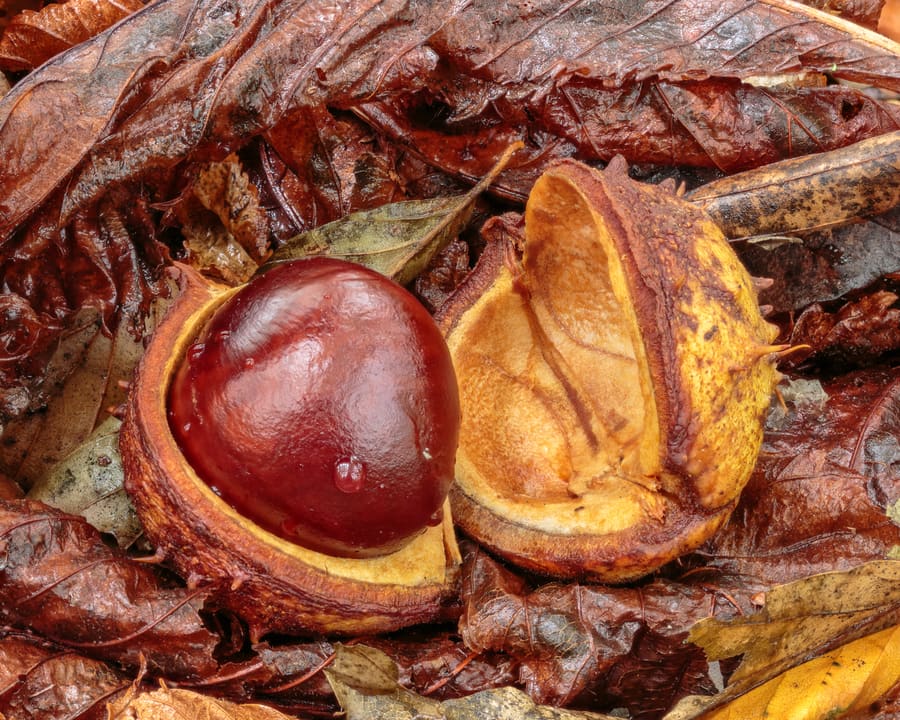 Horse Chestnut (Aesculus hippocastanum)
Horse chestnut (Aesculus hippocastanum) is a large, stately deciduous tree growing up to about 80 ft (25 m), known for its palmate leaves and prickly green seed pods that contain shiny brown seeds (“conkers”). The seeds, bark, and leaves contain compounds that strengthen veins and reduce fluid retention, making horse chestnut a leading remedy for varicose veins and poor venous circulation.
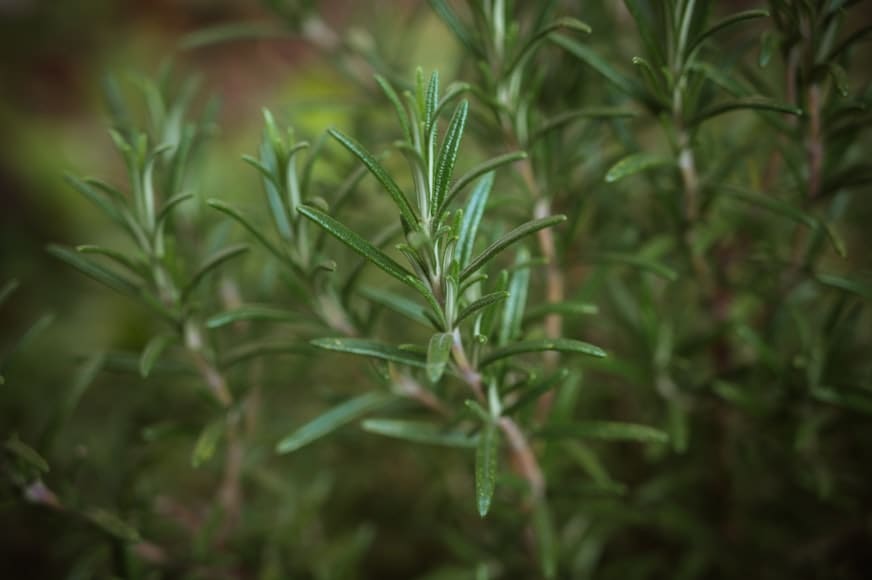 Rosemary (Rosmarinus officinalis)
Rosemary (Rosmarinus officinalis) is an aromatic evergreen shrub, commonly growing to about 6½ ft (2 m), with narrow, pinelike leaves and small, pale blue flowers. Known for its distinctive flavor in Mediterranean cuisine, rosemary is also a prized medicinal herb that supports memory, circulation, and digestion. Its mildly bitter, warming quality has a long history of invigorating and uplifting properties.
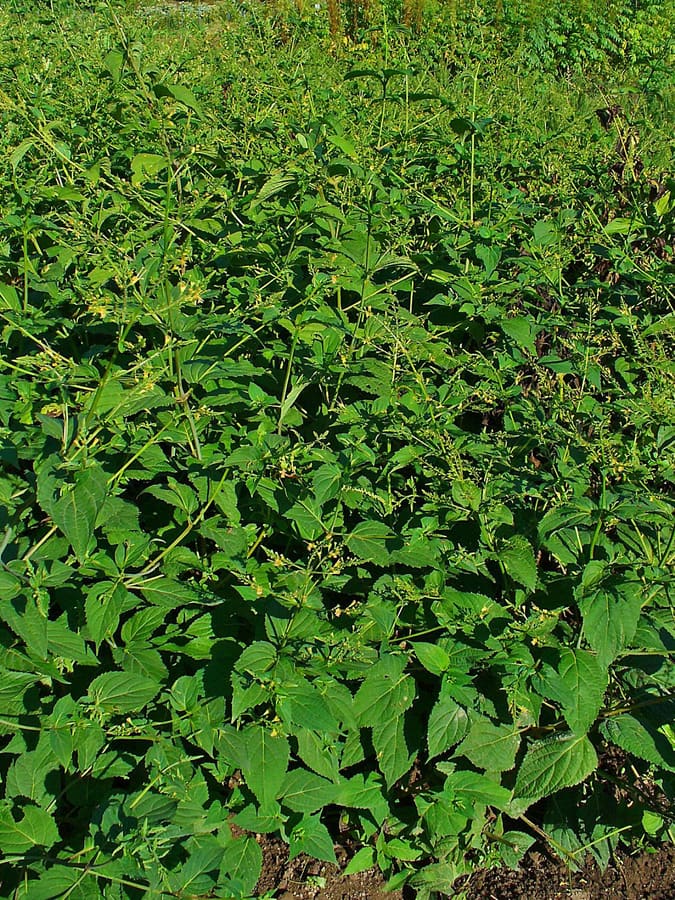 Stone Root (Collinsonia canadensis)
Stone root is a perennial herb growing to 3 feet tall, characterized by a square stem, oval leaves, and clusters of greenish-yellow flowers. Native to moist woodlands of eastern North America, the root is harvested in autumn. The plant contains volatile oil, tannins, and saponins.